Serving Houston, Texas | Residential & commercial
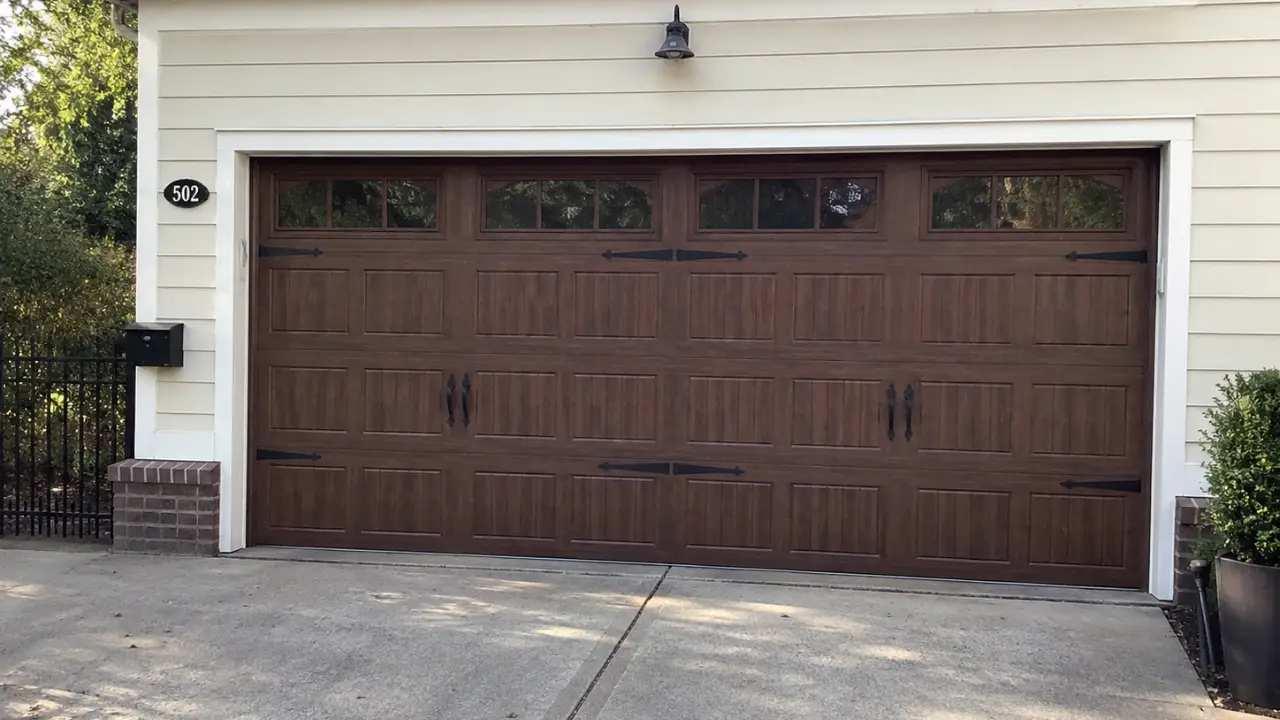
Carriage Style Garage Door Type in Houston combines a traditional barn-door appearance with practical garage access. At US Garage Door Repair, we help Houston, TX homeowners compare materials, plan installations, address operating problems, and choose details that suit their homes, garage openings, and daily routines.
A carriage-style door can change the look of your home without changing how you use the garage. Decorative hinges, handles, windows, and panel patterns create the appearance of old carriage-house doors. Most modern versions still travel upward on tracks.
Does your current garage door look dated, run roughly, or clash with your home? We can help you separate appearance choices from operating needs before you decide what to replace.
A carriage-style garage door uses traditional visual details to resemble doors that once opened outward from carriage houses. The style often includes vertical boards, crossbuck patterns, divided windows, and decorative strap hinges.
The appearance does not determine how the door opens. Most residential carriage-style doors use sectional construction, with horizontal sections that roll overhead. True swing-out doors also exist, but they require different hinges, clearance, and planning.
That distinction matters on a short driveway. You can often get the familiar double-door look without leaving room for two large doors to swing outward.
Decorative handles usually do not operate an overhead garage door. They provide the look, while the springs, tracks, rollers, and opener do the work. Your garage can look ready for a horse-drawn carriage without needing space for a horse.
The best carriage-style door repeats a few existing features of your home rather than competing with them. Roof shape, exterior colors, window patterns, and entry-door details all provide useful direction for choosing a style.
A simple recessed-panel door can work well with brick homes. Crossbuck details may suit farmhouse-inspired exteriors, while restrained hardware can complement a more traditional house. A wide garage door often looks better with a balanced pattern that avoids excessive trim.
A photo of your home can make these comparisons much easier during a discussion.
Material choice affects appearance, upkeep, weight, and how the door responds to Houston weather. The right choice depends on which tradeoffs you are comfortable managing over time.
Steel carriage doors are common because they offer many panel patterns and finish options. Some use embossed surfaces, while others have applied trim. Scratches and exposed edges need attention because damaged protective finishes can allow corrosion.
Wood offers natural grain and traditional construction details. It also needs regular finish care, especially where sun and moisture reach the surface. Wood doors can be heavy, so the spring system must match the actual door weight.
Composite trim can create a wood-like appearance over another door material. Product construction varies, including how trim attaches and how exposed edges are protected. We help you compare the complete door assembly rather than judging only the front surface.
A carriage-style door in Houston should be selected with moisture exposure, direct sun, and storm conditions in mind. Materials, finishes, seals, and structural requirements all deserve attention.
Afternoon sun can make a west-facing door hot. Dark finishes absorb more solar heat, and some products have finish restrictions. Always follow the manufacturer’s approved color and coating guidance.
Humidity and wind-driven rain can affect wood, metal edges, fasteners, and decorative trim. Drainage around the garage also matters. A new bottom seal cannot correct water flowing down a driveway into the opening.
Wind-load requirements depend on the property and applicable building rules. Door size, reinforcement, tracks, and attachment methods must work together. We can discuss what needs verification for your Houston, Texas address before installation plans move forward.
An insulated carriage-style door can reduce heat transfer through the door, but garage comfort depends on the whole space. Wall insulation, roof conditions, air leaks, and sun exposure also affect temperature.
Insulation may be useful when the garage shares walls with living space or serves as a workshop. It will not turn an unconditioned garage into an air-conditioned room. Gaps around the opening can also reduce the benefit of an insulated door.
Compare the door’s construction, perimeter seals, and thermal information together. Do not judge performance by a single insulation number alone.
How do you use your garage most days? A place used only for parking has different comfort needs than a workspace occupied for several hours. We use that distinction to help focus the discussion.
Windows and decorative hardware should support the door’s appearance without creating avoidable privacy or clearance problems. Their position and attachment are just as important as their shape.
Upper windows bring daylight into the garage. Clear glass offers the most visibility, while textured or obscure options can limit the view inside. Privacy depends on the glass, lighting, and viewing angle, so review samples when possible.
Added trim and hardware also change weight. Even attractive extras need to stay within the door system’s operating limits.
A carriage-style replacement must fit the garage opening and the operating space inside the garage. Measuring only the width and height is not enough.
Headroom above the opening affects track and spring placement. Side room provides space for tracks and related hardware. Backroom determines how far the open door can extend into the garage.
Ceiling storage, lights, ducts, and beams may limit available space. Low-clearance track options exist for some applications, but their suitability needs an on-site check.
The opener also needs review, especially if the new door weighs more than the old one. A properly balanced door depends on the correct springs, not an opener pulling harder. During planning, we check whether existing components are suitable for continued use with the proposed door.
An existing carriage-style door needs inspection when its movement, sound, or fit changes. Cosmetic wear and operating trouble may happen together, but they do not always require the same solution.
A door can look beautiful and still have worn moving components. It can also look tired while its operating system remains usable.
Tell us when the issue happens and whether it began suddenly. That information helps us focus the inspection without guessing from appearance alone.
Repair makes sense when the door remains structurally sound and suitable replacement components are available. Replacement may be more practical when damage affects several sections or the existing system no longer fits your needs.
A damaged seal, worn roller, or loose decorative piece does not automatically call for a new door. The cause still needs checking, since repeated wear can point to alignment or balance problems.
Section replacement depends on model identification, availability, and compatibility. A new section may not match an older finish exactly, especially after years of sun exposure.
For homeowners comparing Carriage Style Garage Door Type in Houston, we explain both appearance and operating concerns. Our goal is to help you understand what can stay, what needs attention, and what should be checked before making a decision.
Our service visit focuses on the door’s condition, its operating system, and the changes you want to make. We look beyond the decorative face because safe movement depends on the full assembly.
If the door cannot operate safely, testing may need to stop until the immediate problem is addressed. We do not need to keep cycling a damaged door to prove it has trouble.
Installation involves removing the old assembly as needed, fitting the new door system, and checking its operation. The exact work depends on the chosen product and the condition of the opening.
Decorative trim and handles must be fitted without interfering with door travel. Weather seals should contact the surrounding surfaces properly without causing excessive drag.
Before the work is considered complete, the door needs operating checks. Appearance matters, but smooth movement and correct system setup matter just as much.
The work schedule depends on door availability, job scope, site access, and any problems found around the opening. A straightforward replacement differs from a project that also needs framing or electrical work.
Special finishes, window combinations, and less common sizes may require additional ordering time. Matching an older carriage-style section can also take longer than obtaining common replacement components.
Conditions that can slow the work include damaged mounting surfaces, restricted ceiling space, and incompatible existing hardware. Required approvals or inspections may also affect the sequence.
We discuss scheduling after reviewing the job rather than promising a completion time without enough information. Share any access limits or planned home projects early so the work can be coordinated more effectively.
Stop operating the door if it drops, hangs crooked, has a broken spring, or shows damaged cables. These conditions can create a risk of sudden movement or falling components.
Do not stand beneath a partly open door that appears unstable. Keep children, pets, and vehicles away from the opening until the problem has been assessed.
Springs and cables carry substantial tension. Do not loosen brackets, adjust spring hardware, or attempt to reset a door that has come off its tracks. Disconnecting an opener from an unstable raised door can also create danger.
If the opener runs but the door does not move normally, stop repeated attempts. More button presses are not a repair method, even if the remote looks innocent. Call US Garage Door Repair and describe what you can observe from a safe position.
A clear work area helps us inspect and service the door without moving around stored belongings. You do not need to adjust any door components before we arrive.
Leave a stuck or unstable door in place. Let us know beforehand if the garage is the home’s only practical access point or if another condition could affect entry.
Regular visual checks and product-specific care help you spot wear before it becomes a larger operating problem. Cleaning, finish care, and lubrication needs vary by material and component.
Wash the door using methods approved by its manufacturer. Avoid forcing water into section joints, electrical components, or trim edges. Check painted surfaces for chips and wood surfaces for finish breakdown.
Inspect seals for tears, hardening, or displacement. Look for loose decorative pieces, but do not disturb spring brackets or cable attachments. Use only the recommended lubricant at approved locations, and do not grease tracks unless the product instructions specifically require it.
Review safety testing instructions for your opener and door.
Stop using the system and arrange service.
US Garage Door Repair helps you connect carriage-house appearance with practical garage-door operation in Houston, TX. We can discuss a new look, inspect an existing door, and explain what the opening and operating system need.
If you are considering Carriage Style Garage Door Type in Houston, bring your questions about materials, windows, insulation, and everyday use to a discussion about your door. Photos of your current door and a description of any operating problems provide a useful starting point.
Call (346) 559-3972 or contact us to discuss your carriage-style garage door service needs. We will help you identify the next step for your home.
A carriage style garage door has a traditional carriage-house appearance, often featuring decorative panels and hardware.
Many open overhead like standard garage doors, while others use a swing-out design.
Common materials include wood, steel, and composite materials, depending on the door design.
They are often paired with traditional homes but may also complement other architectural styles.
Many designs include window options, though availability varies by model.
Some models include insulation options. The choice depends on how the garage is used.
Many overhead models can use an automatic opener, depending on the door and opener setup.
General care includes cleaning and following the manufacturer’s maintenance guidance for the door’s material and components.
Replacement may be an option, depending on the garage opening and existing setup.
Yes, US Garage Door Repair provides carriage style garage door service. Contact the company to discuss your needs.
Welcome to WordPress. This is your first post. Edit or delete it, then start writing!