Serving Houston, Texas | Residential & commercial
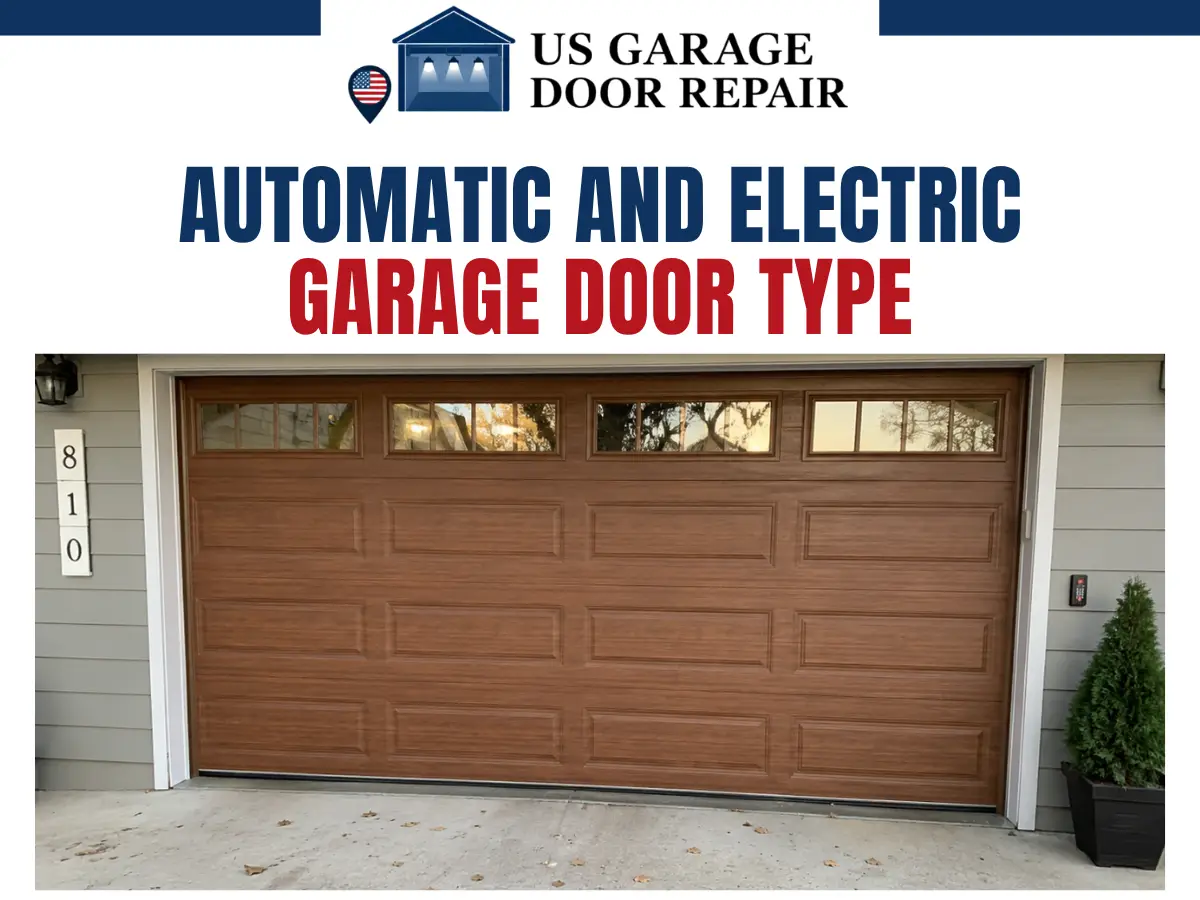
Electric garage doors that fit your Houston home.
Automatic and Electric Garage Door Type in Houston service covers choosing, installing, and repairing powered garage door systems. US Garage Door Repair helps Houston, TX homeowners compare powered door styles, opener options, and safety features, then address problems that affect everyday access, reliable operation, and convenient control.
An automatic garage door combines a moving door, a counterbalance system, and an electric opener. The door closes the opening, while springs help balance its weight. The opener moves a properly balanced door rather than doing all the heavy lifting.
“Automatic” and “electric” usually describe the same residential setup. A motor operates the door through a wall control, remote, keypad, or compatible phone connection. The door itself may be sectional, tilt-up, or another construction suited to the opening.
For most homeowners, choosing an Automatic and Electric Garage Door Type starts with two separate decisions, the door construction and the opener mechanism. A good door paired with an unsuitable opener can still create noise, clearance problems, or unreliable movement.
Do you want quieter operation, easier access, or a replacement for a damaged door? Your answer helps narrow the choices without adding features you will rarely use.
Sectional doors are a common choice for powered residential garages because they move upward without swinging far into the driveway. Hinged panels travel along tracks and rest overhead when open. This arrangement works well where vehicles park close to the garage.
An existing manual door may accept an electric opener, but compatibility needs inspection first. Weak panels, worn hinges, poor balance, or limited support can make a simple motor addition unsuitable.
The right door material depends on maintenance needs, exposure, appearance, and how you use the garage. Houston heat and humidity make protective finishes, weather seals, and ventilation worth discussing. Insulation also matters, but it does not turn a garage into conditioned living space.
Steel doors offer many panel styles and insulation options. Damaged finishes should receive attention because exposed metal can rust, especially where moisture collects.
Aluminum doors resist rust but can dent, depending on their construction. Glass sections bring in daylight, though privacy, sunlight, and added door weight deserve consideration.
Wood doors provide a natural appearance but need ongoing finish care. Their weight can also affect spring selection and opener compatibility.
Is the garage attached to a bedroom or used as a workshop? An insulated door, well-fitted perimeter seals, and a quieter opener may be useful together. The whole assembly matters more than a single feature.
A suitable garage door opener must match the door’s size, weight, balance, and track arrangement. Motor strength alone does not settle the choice. A stronger opener should never be used to force a sticking or poorly balanced door.
We help connect opener selection to the actual garage setup. Storage racks, low beams, ceiling height, and nearby rooms all affect which configuration makes sense.
Useful opener features solve a daily access or safety need rather than simply adding another app. Think about who enters the garage, whether it serves as your main entrance, and what happens during a power outage.
Battery backup can allow limited operation when household power is unavailable. Runtime and operating functions vary by model, battery condition, and door load. The battery needs periodic attention according to the manufacturer’s instructions.
A wireless keypad offers access without a handheld remote. Compatible connected controls can provide door-status checks or remote commands, but they depend on supported equipment and network access.
Automatic closing features need careful setup and compatible safety equipment. They are not a substitute for confirming that people, pets, and objects are clear.
For many families, a simple wall control, dependable remotes, and good lighting cover the basics. Your garage door does not need more daily notifications than your phone already sends.
Changes in movement, sound, or closing behavior can signal a door problem, an opener problem, or both. Catching the pattern helps us inspect the right components. Keep a note of when the problem occurs and whether every control produces the same response.
Does the wall button work while the remote fails? That points the inspection in a different direction than a door that will not respond to any control.
Stop using the system if the door looks crooked, unstable, or partly detached.
An electric door that will not work does not automatically need a new opener. The fault may involve power, controls, safety sensors, door hardware, or the motor assembly. Replacing equipment without checking the door can leave the original problem unresolved.
Photoelectric sensors can be blocked, dirty, loose, or misaligned. Direct sunlight may also interfere with some sensor arrangements. Moving storage bins and gently cleaning accessible lenses are reasonable checks when the door is stationary.
A disconnected trolley can let the motor run without moving the door. Worn gears, a damaged belt, or control-board faults can produce similar symptoms and need closer inspection.
Mechanical resistance may come from bent tracks, worn rollers, damaged hinges, or spring trouble. These problems put extra demand on the opener.
Repeatedly pressing the button rarely fixes the cause. It can turn a small operating problem into additional wear.
A damaged spring, loose cable, or unstable door requires professional attention before further operation. These components handle substantial force. Do not loosen brackets, adjust spring tension, or attempt to pull a crooked door back into place.
Stop and call if you notice any of the following signs.
Keep people and vehicles clear of the opening. Do not stand beneath a partly open door to inspect it.
Use the emergency release only according to the manufacturer’s instructions, preferably with the door fully closed. Disconnecting an open door with a failed spring can allow it to fall.
Our service approach checks the door and opener together before recommending the next step. A working motor cannot compensate for unsafe hardware. We also ask about intermittent trouble that may not appear during the first test.
For Automatic and Electric Garage Door Type in Houston projects, we connect these findings to your access needs. You should understand whether the concern involves the door, the opener, or their interaction.
Repair makes sense when the system remains compatible, structurally sound, and supported by suitable replacement components. Replacement deserves consideration when damage, repeated faults, or missing safety functions limit dependable use. Age alone does not answer the question.
An opener may need a replacement drive component, sensor correction, remote setup, or another focused repair. A door may need roller, hinge, spring, cable, or track work instead of motor replacement.
A full door replacement may be appropriate for extensive panel damage or a poor fit at the opening. Opener replacement may be useful when the current unit lacks needed functions or cannot operate correctly with the door.
We explain what each option addresses and what it leaves unchanged. Installing a quieter opener will not silence loose hinges or worn rollers. Likewise, new panels will not correct a failing control board.
Installation time depends on the opening, existing hardware, equipment compatibility, and the work required. An opener replacement on a suitable door differs from replacing the door, tracks, springs, and motor together. Inspection gives a more useful schedule than a blanket promise.
Electrical work beyond the garage door equipment may require an electrician. We can explain when that issue affects the planned installation.
Let us know if the garage is your only practical entrance. Access planning helps avoid an awkward surprise while the system is disconnected. Never assume a partly completed door is ready to use.
A clear opening and accessible controls help us inspect the system safely and efficiently. You do not need to dismantle anything before we arrive. Leave springs, cables, tracks, and opener housings untouched.
If the door is stuck closed, leave the vehicle inside rather than forcing access. A brief video of an intermittent noise can help, but do not repeat unsafe operation just to capture it.
Houston conditions make moisture control, electrical awareness, and routine observation useful parts of garage door care. Heat, heavy rain, and humid air can affect seals, exposed metal, and equipment condition. The correct response depends on the material and where water enters.
After heavy rain, check from a safe position for water around the opening and electrical equipment. Do not operate controls or reconnect equipment that has been submerged. Flood exposure needs inspection before normal use resumes.
Strong winds can damage panels, tracks, or mounting points. If the door bows, rubs, or moves differently after a storm, stop powered operation until it is checked.
A tighter bottom seal may reduce ordinary gaps, but it is not a flood barrier. Drainage outside the garage also affects water entry.
For a replacement in Houston, Texas, discuss wind-performance requirements that apply to the property. Do not assume every door suits every opening.
Routine observation and manufacturer-directed care help you spot wear before the door becomes difficult to use. Listen during normal operation and watch for uneven travel. A new scrape, wobble, or hesitation deserves attention.
Do not increase opener force settings to overcome resistance. That can hide a mechanical problem and affect protective operation.
If a safety test fails, stop automatic use and arrange service. Safety sensors and reversal functions should never be bypassed for convenience.
US Garage Door Repair helps you connect door selection, opener operation, and repair needs to the way you use your home. We focus on the source of the problem and explain practical next steps. That keeps the conversation useful whether you need quieter access or a system that closes correctly.
When discussing Automatic and Electric Garage Door Type in Houston, tell us what matters most. Mention nearby bedrooms, limited ceiling space, storm exposure, or trouble with existing controls. These details help us evaluate the fit rather than treating every garage alike.
Ready to discuss your garage door in Houston, TX? Call (346) 559-3972 or visit our contact page to contact US Garage Door Repair. Describe the door’s condition and any safety concerns so we can help you plan the next step.
An automatic garage door uses a powered opener to open and close without manual lifting. US Garage Door Repair provides automatic and electric garage door services.
The terms often refer to the same type of system, where an electric motor operates the garage door.
Several garage door types can work with electric openers. Compatibility depends on the door’s design and condition.
Some manual garage doors can be fitted with an electric opener, depending on their construction and setup.
Common controls include remote transmitters, wall buttons, and keypads. Available options vary by system.
Operation depends on the system. Some have battery backup, while others require manual operation according to the manufacturer’s instructions.
Periodic maintenance helps address wear in the door and opener. Maintenance needs vary by system and use.
Possible causes include a power interruption, a control issue, or a problem with the opener or door components.
Consider the door style, available space, control preferences, and compatibility with the opener.
US Garage Door Repair provides service for automatic and electric garage doors. Contact the company to discuss your garage door needs.
Welcome to WordPress. This is your first post. Edit or delete it, then start writing!