
Serving Houston, Texas | Residential & commercial
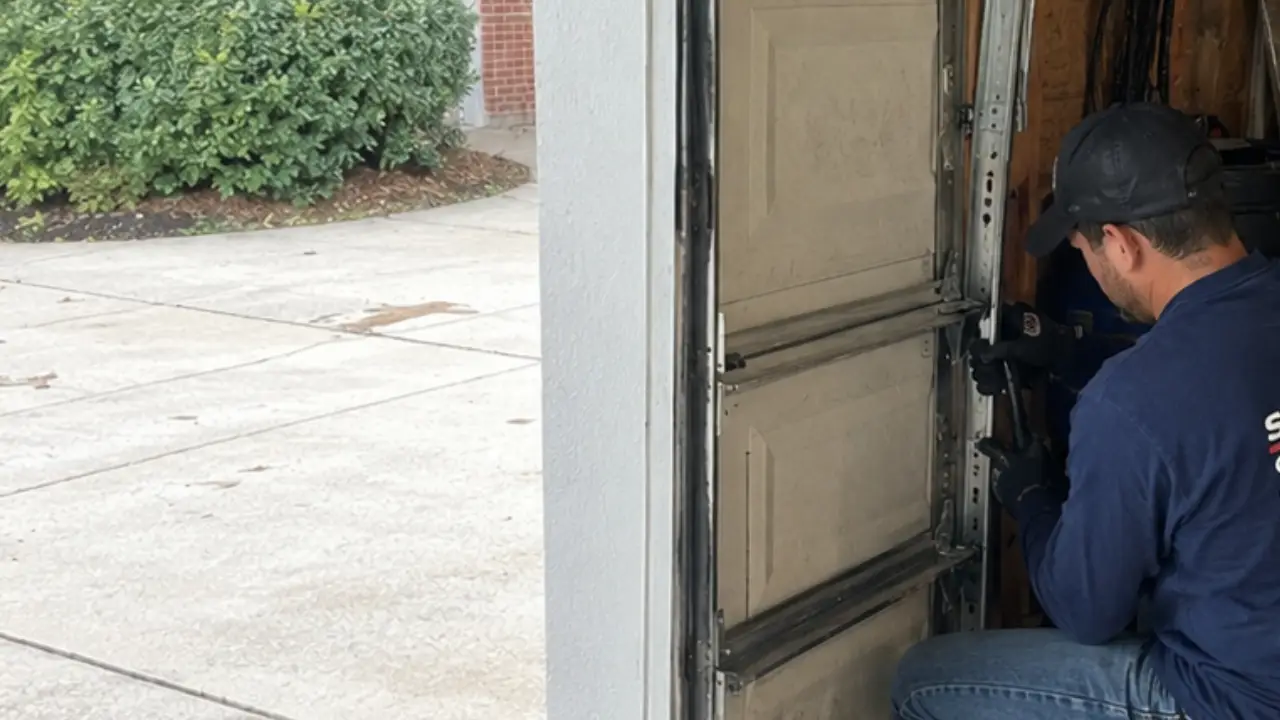
Garage Door Track Repair Service in Houston corrects bent, loose, or misaligned tracks that interfere with safe door movement.
US Garage Door Repair helps Houston, TX, homeowners identify track damage, address related hardware problems, and restore proper roller travel so the door can open and close without binding.
A scraping sound or crooked door can seem like a small annoyance until the door gets stuck. Tracks guide the rollers through each opening and closing cycle. When that path shifts, the door may drag, shake, or pull against its hardware.
We focus on the source of the problem, not just the noise. Call (346) 559-3972 or visit US Garage Door Repair to request service.
Garage door track repair restores the alignment, support, and condition of the metal channels that guide your door. The goal is proper roller movement without rubbing, binding, or unexpected changes in direction.
Most sectional garage doors use vertical tracks beside the opening and curved sections leading into horizontal tracks overhead. These sections must work together with the rollers, hinges, brackets, and door panels. A problem at a connection can affect movement across the full opening.
Not every noisy door needs track replacement. A worn roller or loose hinge can produce similar symptoms, which is why inspection comes before a repair recommendation.
Changes in sound, position, or travel can point to track trouble before the door stops working. Pay attention to symptoms that repeat at the same point during opening or closing.
Does the door jerk as it reaches the curved section? Does one side seem to move ahead of the other? Those details help narrow the inspection, though they do not confirm the cause by themselves.
A garage door should not provide percussion for your morning commute. New grinding, popping, or banging deserves a closer look before regular use continues.
Track damage commonly starts with a physical hit, shifting hardware, or wear elsewhere in the door system. Finding that cause helps prevent the same problem from returning after an adjustment.
A bumper, trash bin, lawn mower, or stored equipment can strike the lower vertical track. The dent may look minor from the driveway, but the roller needs a clear path through that exact spot.
We inspect the surrounding system because a bent track may be the cause of trouble, or the result of another fault.
A crooked, jammed, or partially off-track garage door should stay out of use until it has been inspected. Continued operation can worsen damage and create a falling-door hazard.
Keep people, pets, and vehicles away from the opening. If the door is open or partly open, do not walk beneath it to investigate. Leave the door in its current position rather than trying to force it closed.
Spring and cable components can hold substantial tension. Even hardware that looks unrelated to the track may be supporting the door’s weight.
If your vehicle is trapped inside, mention that when you call. Do not force the door upward to create clearance.
US Garage Door Repair checks the door’s condition and the source of resistance before choosing a repair method. We assess the tracks alongside the hardware that supports and moves the door.
A visible bend is useful evidence, but it is not the whole diagnosis. We also look for signs of impact, worn rollers, loose supports, cable problems, and damage around mounting points.
Our Garage Door Track Repair Service in Houston addresses the affected track without ignoring connected problems. That keeps the repair focused on how the full door operates.
A track may be adjusted when its shape and strength remain suitable for use, but severe damage can require replacement. The decision depends on the condition of the channel, mounting points, and connected sections.
A small bend with no cracking may allow correction. A crushed channel, sharp crease, broken connection, or serious corrosion may make replacement the more practical choice. Repeatedly bending weakened metal is not a sound long-term approach.
Track replacement also requires a compatible profile and fit. Tracks are not interchangeable simply because they look similar from a few feet away. Door size, roller fit, track radius, and the existing installation all affect compatibility.
We also check why the track moved. Tightening a bracket into damaged wood will not resolve weak support. Likewise, correcting alignment without addressing a failed roller can leave the door dragging through the repaired section.
You should understand what can be restored, what needs replacement, and whether another condition must be corrected before operation resumes.
Track problems can resemble faults in the rollers, cables, springs, or opener, so diagnosis should consider each system. Replacing the wrong component may leave the original symptom unchanged.
A door that stops halfway may be binding in a bent track. It may also have a damaged roller or a spring-related lifting problem. A crooked door can involve track alignment, but cable trouble is another possible cause.
The opener deserves attention without becoming the automatic suspect. An opener may stop because it encounters excess resistance from the door. Increasing opener force to push through that resistance is not a track repair.
Safety sensor checks may also be appropriate when closing problems remain. Sensors do not correct a bent track, and straight tracks do not resolve every reversing issue.
The time needed for track repair depends on the damage, replacement needs, and condition of nearby hardware. An inspection gives a better basis for discussing the work than a symptom description alone.
A minor alignment problem with accessible hardware may involve fewer steps than a door with a crushed track and displaced rollers. Weak framing, multiple damaged sections, or cable trouble can add work before the door is ready for testing.
Access also matters. Shelving, parked vehicles, ceiling storage, or items stacked beside the opening may limit access to brackets and overhead tracks. We can discuss these concerns when you arrange service.
If replacement components are needed, compatibility and availability can affect scheduling. We avoid treating every track problem as the same repair because doors and installations differ.
Want to make the initial conversation more useful? Tell us whether the door is open, closed, crooked, or stuck at a particular point.
The best preparation for garage door repair is a clear work area around a door that stays undisturbed. You do not need to test the problem again or remove hardware before the visit.
Clear only areas you can reach safely. If the door is hanging unevenly or partly open, do not pass underneath it to move a vehicle or retrieve belongings.
Do not clean away loose hardware or discard a roller that has fallen out. Those pieces may help explain what happened.
If the garage is your usual entrance, use another door while the damaged system is out of service.
Routine observation can help you catch new track problems before they become a larger interruption. After service, follow care instructions suited to your door and its hardware.
Look at the tracks from a safe distance during normal use. Notice whether the door moves evenly and whether scraping or shaking returns. A change in behavior matters more than getting used to a noise that was not there before.
Do not pack the track channels with grease. Grease can collect grit, and tracks are not normally treated like roller bearings. Roller and hinge lubrication needs depend on their construction and the manufacturer’s instructions.
Avoid adjusting track spacing yourself. A small change can affect roller contact, panel clearance, and movement through the curve.
Houston’s humid conditions and frequent garage use can contribute to corrosion and hardware wear. These conditions do not cause every track problem, but they make periodic visual checks useful.
In a Houston, Texas, garage, moisture can remain near the lower track after wind-driven rain or water entry. Look for rust, damaged fasteners, and changes around the mounting surface. If water has entered the garage, avoid using wet electrical equipment until its condition has been assessed.
Storm debris and stored items can also create problems near the opening. A branch, loose object, or fallen storage item may obstruct movement or strike a track.
Attached garages often serve as storage rooms and main household entrances. That puts more activity close to the door’s moving hardware. Leave the vertical tracks and overhead travel path clear rather than treating those areas as extra storage space.
If a vehicle bumps the track, stop using the door until the damage is checked. A quick test cycle can turn a small impact into a larger repair.
US Garage Door Repair explains the observed damage and the work needed to address it. You should not have to guess whether a recommendation concerns the track, a roller, or another connected component.
We distinguish between the visible symptom and its likely cause. That matters when scraping comes from worn hardware rather than a bent channel, or when a shifted track points to weak mounting support.
Our approach to discussing repair recommendations centers on practical questions.
Clear communication also includes noting concerns that fall outside track work, including damaged framing. We keep recommendations tied to the condition found rather than assuming every door needs the same work.
US Garage Door Repair provides Garage Door Track Repair Service in Houston for doors with bent tracks, alignment problems, and related movement issues. If your door scrapes, binds, or sits crooked, arrange an inspection before continued use causes more damage.
Tell us what you see, when the problem began, and whether the door is stuck open or closed. We can discuss the next step without asking you to force or dismantle the door.
Call (346) 559-3972 or request Garage Door Track Repair Service. Keep an unstable door out of use while you arrange help.
Garage door track repair addresses issues with the tracks that guide the door as it opens and closes. US Garage Door Repair provides this service.
Uneven movement, unusual noises, or difficulty opening and closing may indicate a track issue.
Everyday wear, accidental impacts, and loose components can contribute to track problems.
A damaged track may interfere with door movement and place added strain on other components.
Avoid operating a door that appears off track, as continued use may create safety concerns or worsen the damage.
Track repairs are generally best handled by a garage door professional because the door and related components can pose safety risks.
Whether repair or replacement is appropriate depends on the track’s condition and the nature of the damage.
No. Noise can come from several components, so the source should be identified before deciding on repairs.
Routine maintenance may help identify wear, misalignment, or other track concerns before they become more noticeable.
You can contact US Garage Door Repair to discuss garage door track repair service and your door’s general condition.
Welcome to WordPress. This is your first post. Edit or delete it, then start writing!