Serving Houston, Texas | Residential & commercial
Replace a Worn Garage Door With a Better Fit for Your Home
Garage Door Replacement Service in Houston removes a worn or damaged door and installs a properly fitted replacement. US Garage Door Repair helps Houston, TX, homeowners assess their existing system, compare door options, and plan installation around safe operation, everyday use, and the home’s exterior.
A garage door should open smoothly, close securely, and suit the way you use your garage. If yours struggles with those basics, replacement may be worth considering.
We focus on the whole opening, not just the door panels. Tracks, springs, cables, seals, and opener compatibility all affect how a replacement door works.
Replacement makes sense when damage, wear, or repeated operating problems affect the door’s structure or safe movement. A single noisy roller does not mean the entire door needs to go.
Look at how the door behaves through a full opening and closing cycle, but only if it appears safe to operate. Does it shake, drag, sit crooked, or leave gaps along the floor?
A garage door should not announce every departure to the whole street. Persistent noise deserves an inspection, even when replacement is not necessary.
Repair is often appropriate for an isolated component problem, while replacement addresses broader damage or an unsuitable door. We look at the condition of the system before discussing either path.
A broken spring, worn roller, or faulty opener may be repairable without changing the door. A damaged section may also be replaceable if a compatible section is available and the rest of the door remains sound.
Replacement becomes more practical when several sections are damaged, the door is badly corroded, or suitable replacement components are unavailable. A door that no longer fits the opening correctly also needs careful evaluation.
Ask yourself what you want to solve. Is the problem a recent breakdown, or have you been dealing with noise, gaps, and repeated trouble for months?
Share that history during your visit. It helps us separate a single fault from a larger door problem.
Houston heat, humidity, and heavy rain make material selection and proper sealing worth close attention. A replacement door should suit the conditions around your own garage.
Steel doors can develop corrosion where protective finishes are scratched or worn. Wood doors need regular attention to their finish, especially where moisture collects along the lower edge.
Sun exposure matters, too. A garage facing strong afternoon sun may become uncomfortable, particularly if you use it as a workspace.
A new bottom seal can reduce gaps, but it cannot correct a sloped driveway or stop flooding. Drainage problems need their own solution.
The right door material depends on your preferred appearance, upkeep habits, and garage use. Comparing those factors is more useful than choosing by looks alone.
Steel is a common choice because it offers many styles and finishes. Construction varies, so ask about panel build, insulation, and hardware compatibility rather than treating every steel door as equal.
Wood offers a natural appearance but needs ongoing finish care. Its weight also affects spring selection and the rest of the operating system.
Aluminum and glass doors can suit a modern exterior and bring daylight into the garage. Glass type, privacy, heat exposure, and product specifications deserve careful review.
We can discuss available options for your opening without assuming the same door works for every Houston home.
An insulated garage door can reduce heat transfer through the door, but it does not make an unconditioned garage temperature-controlled. Walls, ceilings, gaps, and daily opening habits also affect comfort.
Insulation may be useful if your garage shares a wall with living space or sits below a room. It may also help if you spend time working inside the garage.
Compare the construction of the complete door, not just a single insulation number. Panel joints, perimeter seals, windows, and installation quality also influence performance.
If comfort is your main concern, mention that early. We can discuss door options while keeping expectations realistic for Houston’s hot months.
A closed, well-fitted door generally offers better separation from outdoor conditions than a poorly sealed door. Leaving it open for long periods reduces that benefit.
A replacement door can update your home’s exterior while improving how securely the opening closes. Appearance and daily function should be considered together.
Panel patterns, color, window placement, and decorative hardware all affect the finished look. Compare samples with your siding, brick, trim, and front entry rather than viewing the garage door alone.
Windows bring in daylight, but they can also expose stored belongings. Consider their height, glass options, and visibility from the street.
Security also depends on sound panels, correctly fitted tracks, proper closing, and compatible opener settings. A new door cannot address every access concern by itself.
If your neighborhood has exterior approval rules, check them before placing a door order. Confirming permitted colors and styles early can prevent an avoidable delay.
Our Garage Door Replacement Service in Houston begins with checking the existing door, the opening, and the hardware that supports movement. Correct measurements help determine which replacement options will fit.
Door width and height are only part of the assessment. Headroom, side clearance, and space behind the opening affect track layout and opener placement.
Visible framing damage or uneven concrete may require work beyond door replacement. We explain those concerns so they can be addressed rather than hidden behind a new door.
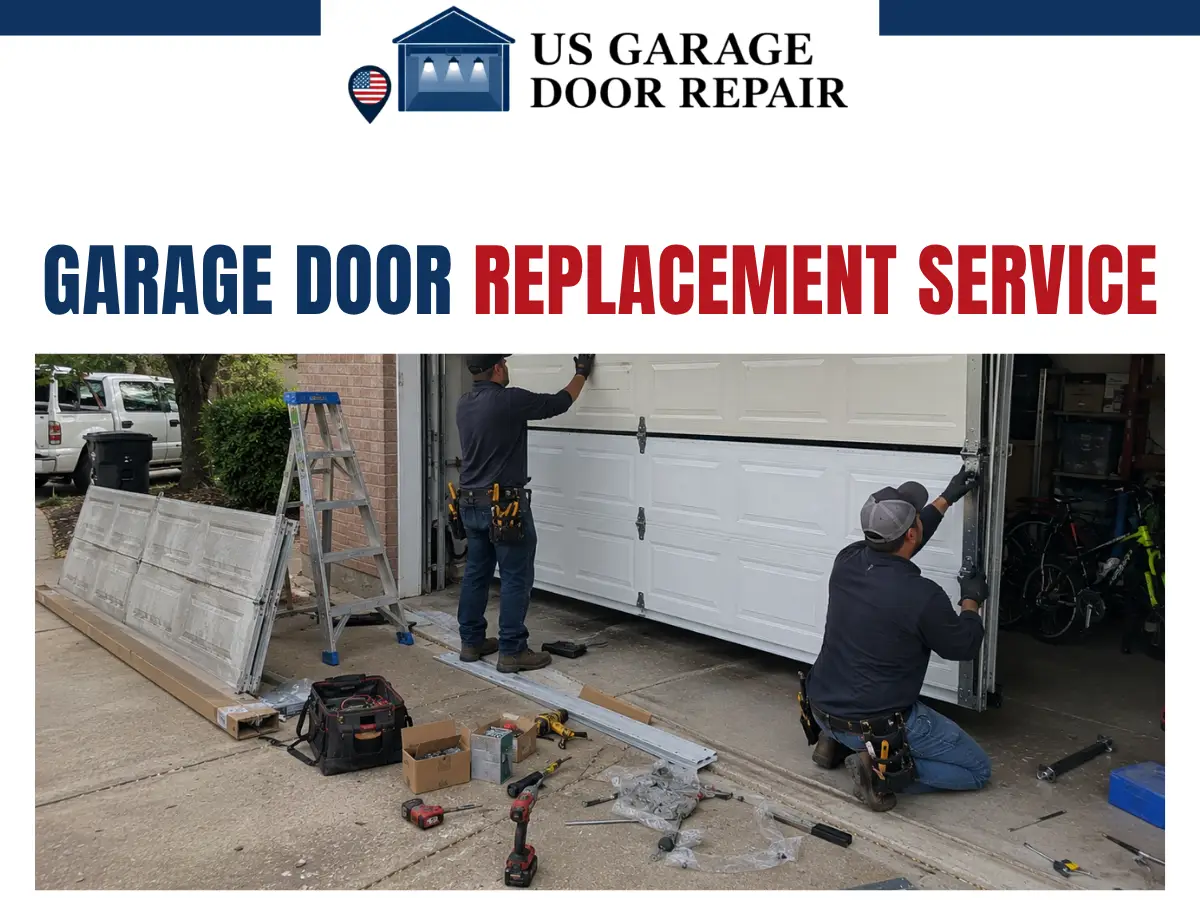
Door replacement involves removing the existing assembly, installing compatible components, and checking the completed system. The exact work depends on the door model and the condition of the opening.
Before work begins, confirm what removal and disposal arrangements are included. Clear expectations help keep installation day straightforward.
An existing opener may work with a replacement door if its type, condition, and specifications are compatible. A new door does not automatically require a new motor.
We consider the opener’s intended use, door dimensions, connection points, and available clearance. Worn drive components or unreliable controls may need separate attention.
The door must also be properly balanced by its spring system. An opener should move a balanced door, not struggle to lift unsupported weight.
If you want to keep your current opener, mention that during planning. We can assess compatibility before treating it as part of the finished setup.
Never use extra closing force to push past binding or an obstruction. That can hide a mechanical problem and create an unsafe condition.
Replacement timing depends on product availability, the installation scope, and whether the opening needs other work. We discuss scheduling once the door and site requirements are understood.
Standard configurations may be easier to source than unusual sizes, selected finishes, or special glass options. Availability should be confirmed for the actual product you choose.
Installation can take longer if mounting areas are damaged, old hardware is difficult to remove, or clearance changes are needed. Electrical issues affecting the opener may also require separate work.
Need the garage for daily parking or storage access? Tell us before scheduling so we can discuss how the work may affect your routine.
Do not assume the door will remain usable throughout installation. Plan another entry route and move needed items out beforehand.
Stop operating the door if it hangs crooked, drops unexpectedly, has a loose cable, or shows a broken spring. Keep everyone away from the opening until the problem is assessed.
Garage doors are heavy, and springs store substantial force. Trying to release a cable or adjust a spring without proper tools and training can cause serious injury.
If a vehicle is trapped inside, explain the situation when you call. Do not force the door simply to recover the car.
A clear work area gives the crew access to the door, tracks, and opener. You do not need to empty the entire garage, but the installation path should be open.
Ask how much clearance your installation needs when scheduling. Track layouts and garage sizes vary, so specific instructions are more useful than a guess.
Leave the old door and hardware in place. Taking components apart beforehand can create hazards and make the existing setup harder to assess.
Routine observation and product-specific care help you notice problems before they interrupt daily use. Follow the door and opener instructions for cleaning, lubrication, and safety checks.
Look at the panels, seals, and visible hardware periodically from a safe position. Listen for new scraping, grinding, or uneven movement.
Do not grease the tracks unless the product instructions specifically call for it. Random lubrication is not a substitute for finding the source of a problem.
US Garage Door Repair helps you make replacement decisions based on your door’s condition and your household’s needs. We explain the proposed work in plain language so you know what to discuss before installation.
You should understand which components are being replaced, whether the opener can stay, and whether the opening needs attention. Questions about material, insulation, window placement, and daily operation belong in that conversation.
Ready to discuss Garage Door Replacement Service in Houston? Tell us what your current door is doing and what you want from its replacement.
Call (346) 559-3972 or visit our contact page to contact US Garage Door Repair. We can help you plan the next step for your Houston, TX, home.
It involves removing an existing garage door and installing a replacement. US Garage Door Repair provides this service.
Replacement may be worth considering if your door is damaged, no longer operates properly, or no longer suits your needs.
The choice depends on the door’s condition, the nature of the problem, and your preferences.
Consider the door’s appearance, material, maintenance needs, and compatibility with your garage.
A different style may be an option, depending on your garage’s requirements and available choices.
That depends on the condition of your existing opener and its compatibility with the replacement door.
The time needed varies with the door, the garage setup, and the work involved.
Clear belongings from the work area and confirm any preparation instructions with your service provider.
Removal and disposal arrangements vary, so discuss how the old door will be handled before work begins.
Garage doors generally need routine care. Follow the manufacturer’s guidance for the door and its components.
Welcome to WordPress. This is your first post. Edit or delete it, then start writing!