Serving Houston, Texas | Residential & commercial
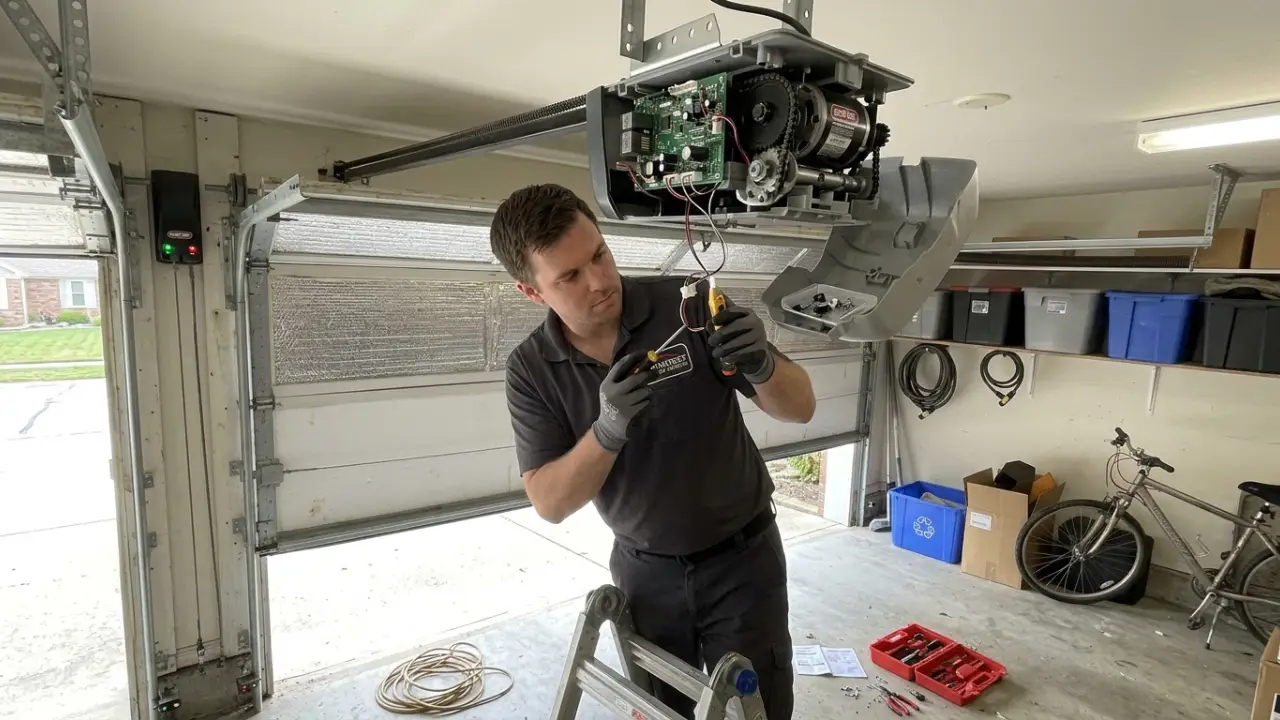
Opener repair restores control of your garage door.
Garage Door Opener Repair Service in Houston addresses problems with the motor, controls, sensors, and drive system that move your door. US Garage Door Repair helps Houston, TX homeowners identify the cause, review repair options, and restore proper operation without overlooking door problems that can strain the opener.
An opener problem can come from the operator itself or from a door that is difficult to move. Checking both helps prevent a motor repair from missing the actual source of trouble.
Your garage door opener controls movement, but the springs support most of the door’s weight. Tracks, rollers, hinges, and cables also affect how smoothly the system works.
If a spring breaks or a roller binds, the opener may stop, reverse, or struggle. Repeatedly pressing the button can put more stress on the motor and drive components.
Our Garage Door Opener Repair Service focuses on finding the fault before recommending work.
The goal is to separate an electrical or control problem from a mechanical door problem. That distinction guides the next step.
Changes in movement, sound, or control response often signal an opener fault. A door does not need to stop completely before a problem deserves a closer look.
Does the wall button work while the remote does nothing? That points to a different set of checks than a motor that hums without moving the door.
Describe what happens before, during, and after the failure when you call. A blinking light or repeated sound pattern may also help identify the problem.
Avoid repeated test cycles if the door jerks, hangs crooked, or makes harsh noises. Those symptoms call for stopping use and having the door checked rather than trying the button again.
An opener that does nothing may have a power interruption, a control fault, or an internal electrical problem. Silence alone does not prove that the motor has failed.
Start with simple observations from a safe position. Check whether the opener lights or wall control indicators are on, then note which controls still respond.
A tripped circuit or GFCI outlet may interrupt power to some garage outlets. If a reset trips again, stop resetting it and have the electrical fault checked.
Do not remove the motor housing or touch exposed wiring. A burning smell, smoke, or scorched outlet requires stopping use and getting appropriate professional help.
A working wall button with an unresponsive remote often points to the handheld control, receiver, or programming. Checking those items can prevent unnecessary work on the opener’s drive system.
Remote batteries, worn buttons, and lost programming are common places to start. A damaged antenna or radio interference can also shorten operating range.
Some replacement light bulbs can interfere with certain opener receivers. If remote range changed after a bulb replacement, mention that during the visit.
For keypad trouble, note whether the buttons light up and whether the code is accepted. Weather exposure, battery condition, and keypad wear can affect response.
Use the manufacturer’s instructions before changing programming. Pressing and holding the wrong button can erase stored remotes on some models.
If a remote is missing, ask about removing its access from the opener’s memory. Any remaining remotes may need to be programmed again afterward.
Misaligned, obstructed, or damaged safety sensors can prevent a garage door from closing normally. These sensors help detect objects across the opening near the floor.
A storage bin, broom handle, or leaf may block the beam. Dirt on the lenses or a bumped bracket can also interrupt the signal.
Sensor light colors and meanings vary by model. A steady light on one unit does not always confirm that the entire system is working.
Never tape sensors together, move them away from the opening, or bypass their function. An automatic garage door needs its protective systems working when closing, even when the obstruction turns out to be a stubborn cardboard box.
New grinding, slipping, rattling, or humming sounds can point to worn opener components or resistance in the door. The timing and location of the noise help narrow the cause.
Chain-drive units normally sound different from belt-drive units. What matters most is a change from your opener’s usual sound.
Grinding from the motor housing may involve internal gears or other drive components. A motor that runs without moving the door may involve the trolley, drive connection, or a disengaged release.
Rattling can come from mounting hardware or nearby door hardware. Humming without movement may have several causes, including a stalled motor or a door that cannot move properly.
Do not tighten a chain or belt by guesswork. Incorrect tension can add wear and affect operation.
Tell us whether the noise happens while opening, closing, or in both directions. A short recording from a safe distance can be useful if the symptom is intermittent.
A door that stops early or reverses may have a sensor issue, incorrect travel settings, or physical resistance. Increasing closing force without checking the cause can create a safety risk.
Travel settings tell the opener where the door should stop. If those settings are wrong, the door may stop above the floor or push against it before reversing.
Door movement matters just as much. Bent tracks, worn rollers, damaged sections, or spring trouble can make the opener work harder than it should.
During Garage Door Opener Repair Service in Houston, the diagnosis should address both the controls and the door’s movement. A control adjustment cannot correct a broken spring or damaged cable.
Has the problem started after something struck the door? Mention that, even if the impact seemed minor.
Avoid forcing the door closed or holding controls repeatedly to get around a fault. Keep people, pets, and vehicles clear until the cause is understood.
A repair visit should move from your description of the problem to inspection, diagnosis, and a clear explanation of the proposed work. That keeps the visit focused on the fault rather than guesswork.
We start with what you have noticed. Recent outages, unusual noises, and changes in remote response can help direct the checks.
Testing depends on the door’s condition. If a broken spring or damaged cable makes movement unsafe, that issue must be addressed before powered operation continues.
Repair is a practical option when the problem can be corrected with compatible components and the opener remains suitable for use. Replacement may be worth discussing when damage is extensive or needed components are unavailable.
A faulty remote does not automatically call for a new opener. The same applies to some sensor, wall control, and drive component problems.
The decision should consider the specific fault and the condition of the opener.
Model information helps make that discussion more useful. If you can safely read the label, have the manufacturer and model number ready.
There is no need to climb onto a vehicle or unstable chair to find it. We can discuss what information is accessible when you call.
The time needed for opener repair varies with the fault, access, and availability of compatible components. An intermittent electrical issue may take longer to trace than a visible sensor obstruction.
A straightforward control problem and a damaged drive assembly involve different work. Door damage discovered during inspection can also change the scope.
We can discuss scheduling and the reported symptoms when you contact us. The inspection provides a firmer basis for explaining what work is needed and what happens next.
A crooked, falling, or jammed door needs professional attention before further operation. Opener troubleshooting should never put you beneath an unstable door.
Stop using the system if you see a loose cable, a visible spring gap, a bent track, or a door hanging unevenly. Keep children and pets away from the garage opening.
The emergency release also requires care. Disconnecting an opener from an open door with a broken spring can allow the door to fall.
If the door traps your vehicle, explain that when you call. Getting the car out matters, but avoiding a falling door matters more.
Preparing access and recording symptoms helps us inspect the system without unnecessary interruptions. You do not need to take anything apart before we arrive.
Move your vehicle only if the door operates safely. Do not cycle a damaged door just to create more room.
Let us know if the garage is your only usual entry point. Also mention low ceilings, overhead storage, or anything that limits access around the motor unit.
Heat, humidity, storms, and changing sunlight can contribute to garage door opener symptoms in Houston, Texas. Those conditions provide clues, but they do not replace a proper diagnosis.
High garage temperatures may contribute to intermittent behavior in a failing electrical component. Repeated operation can also cause some motors to stop temporarily through thermal protection.
Moisture can affect exposed connections and metal hardware. After water enters the garage, avoid using electrical equipment that may have been wet until it has been checked.
Storm-related outages may interrupt power, and electrical surges can damage components. Note whether the opener stopped working immediately after a storm.
Direct sunlight can interfere with some safety sensor arrangements at certain times of day. If the door refuses to close only during a narrow afternoon window, tell us that pattern.
The useful question is not just, “What stopped working?” It is also, “What changed before it stopped?”
Watching and listening during normal use can help you notice problems before the door stops moving. Care should follow the instructions for your specific opener and door.
After service, pay attention to consistent movement, normal stopping points, and remote response. Report a returning symptom rather than repeatedly changing settings.
Lubrication needs vary by component and opener type. Do not spray lubricant onto belts, electrical components, or sensor lenses.
US Garage Door Repair can help you take the next step when your opener becomes unreliable. Tell us what the door does, which controls respond, and whether anything looks damaged.
For Garage Door Opener Repair Service in Houston, call (346) 559-3972 or request an appointment. We can discuss your symptoms and access needs before the visit.
Whether the problem is a silent motor, a faulty remote, or repeated reversing, start with a careful diagnosis. Your garage door should not turn leaving home into the hardest task of the morning.
This service addresses problems with the system that operates a garage door. US Garage Door Repair provides garage door opener repair service.
Unusual sounds, inconsistent operation, or a door that does not respond may indicate an opener issue.
Power, control, or opener component issues may affect its response. An assessment can help identify the cause.
Repair may be an option depending on the opener’s condition and the nature of the problem.
This may relate to an obstruction, a sensor issue, or another operating problem. The cause can vary.
New or unusual noise may indicate wear or an operating issue that needs assessment.
Remote control problems may involve the remote or the opener system. Identifying the source helps determine the next step.
Avoid using a garage door system that appears unsafe or behaves unpredictably, and seek professional assistance.
The time needed varies with the problem, the opener’s condition, and any parts required.
Contact US Garage Door Repair to discuss the issue and ask about service availability.
Welcome to WordPress. This is your first post. Edit or delete it, then start writing!